

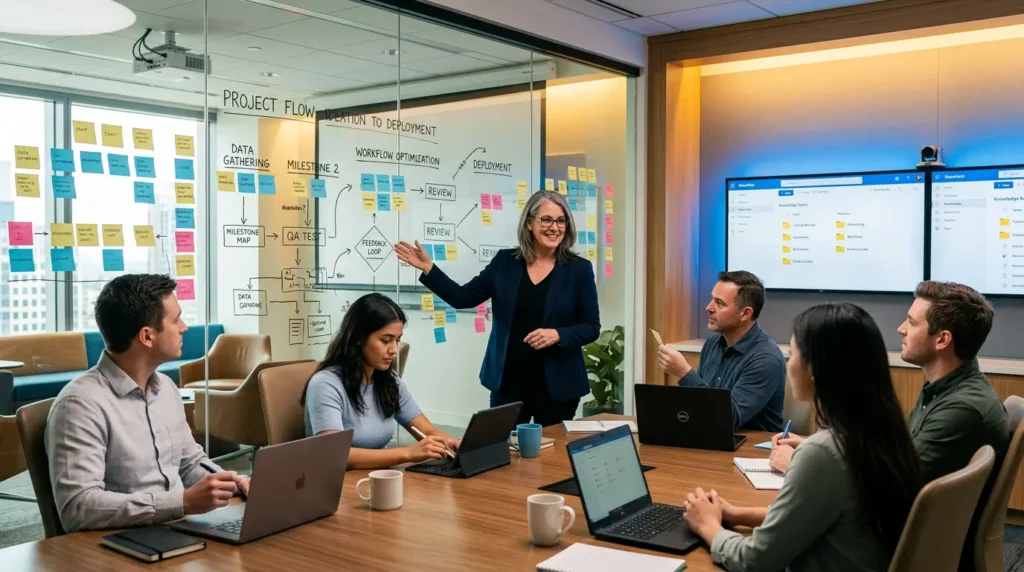
We combine soft skills training, onboarding, lectures, workshops and systematic know-how sharing. We help create learning that is based on real work situations, corresponds to the roles and goals of the organization and supports the transfer of knowledge into everyday practice.
Individual training sessions can provide new impetus. However, longer-term development also needs to look at the person's role, work situations, team relationships, processes, organizational culture, and the way new knowledge is used upon return to practice.
That's why we don't see education as a series of isolated courses. We connect content, learning format, training, feedback, onboarding, internal materials, and experience sharing so that individual activities support the common direction of the organization.
The core of this category is the design and implementation of educational formats or systems. It differs from coaching and mentoring in its group and systemic focus; from HR consulting in its emphasis on learning; from facilitation in its specific knowledge, skills, or transfer to practice.
What a person needs to know and use independently.
Where and under what conditions should the new knowledge be used.
Which supports learning, sharing, and safe practice.
How knowledge is captured, made accessible and updated.
Each service has its own purpose, its own modules, and its own process. The service detail explains the exact scope, outputs, pricing factors, and boundaries of cooperation.
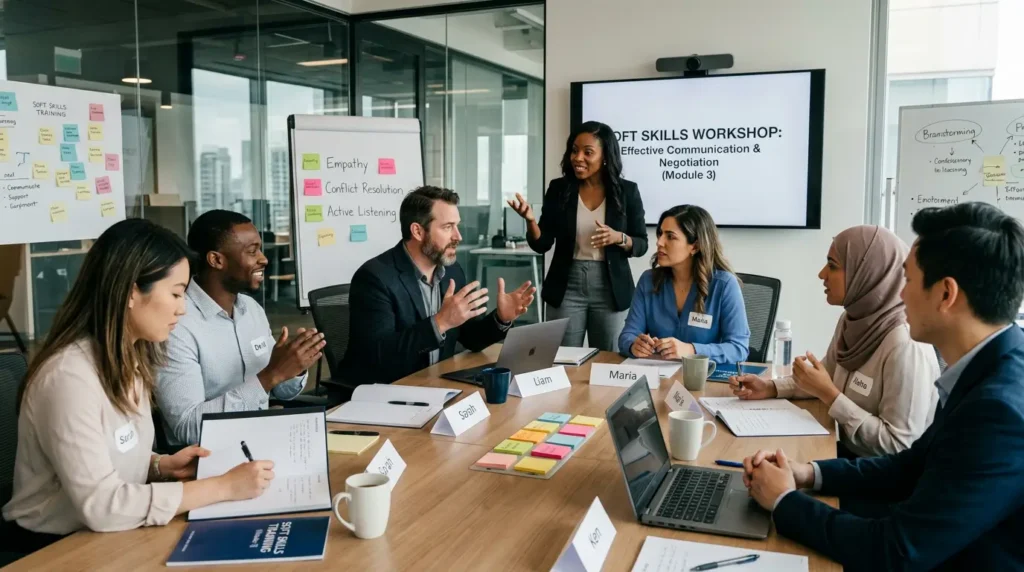
Practical development of communication, assertiveness, feedback, collaboration, conflict management, presentation skills or emotional intelligence according to real team situations.
- mapping roles and work situations,
- tailor-made program design,
- model situations and practical exercises,
- conducting training and reflection,
- recommendations for implementation.
Design a thoughtful path for new employees or a longer-term development system for existing teams, linked to roles, culture, processes, and autonomy milestones.
- analysis of roles and current learning,,
- design of educational or onboarding architecture,,
- topics, steps, responsibilities and milestones,,
- materials, forms of learning and feedback,,
- implementation and update plan.
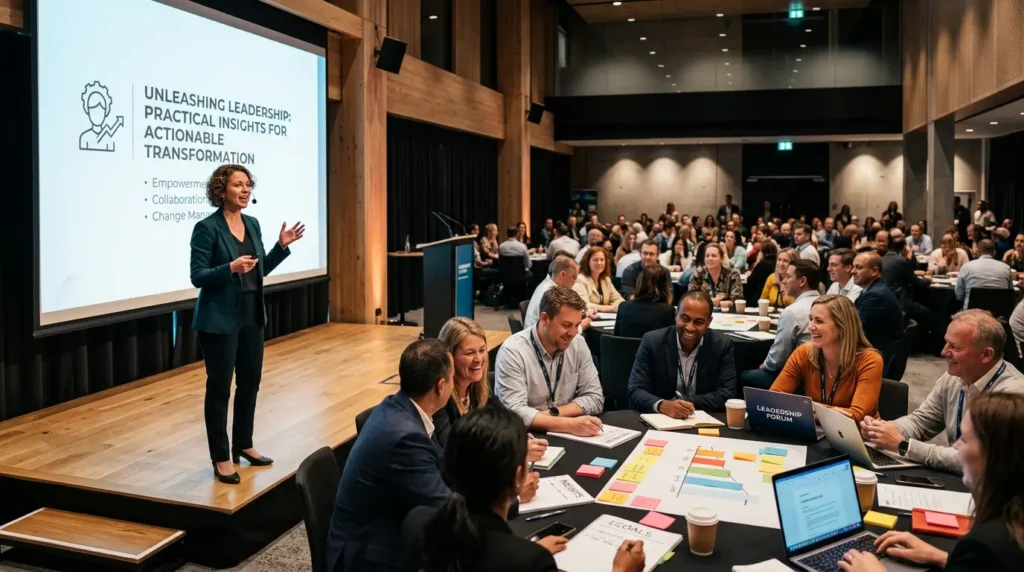
A professional topic tailored to a specific audience and purpose. A lecture creates a comprehensible context; a workshop adds active work, discussion, practice, or collaborative output.
- specifying the goal, audience and context,
- professional and dramaturgical training,
- presentation, examples and work activities,
- conducting a lecture or workshop,
- summary of suggestions or outputs.
A system for capturing, organizing, and sharing important corporate know-how that connects a knowledge base, working materials, internal experts, and update rules.
- identification of critical know-how,
- knowledge base structure and content management,
- work procedures, manuals and materials,
- internal sharing and peer-to-peer learning,
- responsibilities and update rhythm.
The common denominator is the need for a deeper conversation, a development goal, and working with real experience. The specific service depends on whether you need custom answers, active recommendations, or a system for more people.
The team needs to work with real conversations, decisions, and relationship situations, not just take a general course.
New employees need to connect professional training, culture, people, processes, and gradual assumption of responsibility.
The company needs to clearly present the topic, engage the audience, or create a usable output during the workshop.
Important information is difficult to find, procedures are not captured or remain dependent on the experience of a few people.
Education exists, but there is a lack of connection to roles, organizational goals, subsequent practice, and evaluation methods.
The organization wants to create practical conditions in which people learn from each other and knowledge is continuously updated.
Training, workshops, onboarding plans, and knowledge management may all work on a similar topic, but they deliver a different kind of outcome. The crucial question is: do you need to develop a skill, create a learning system, open a topic with a group, or capture know-how?
Soft skills training, when you need participants to better master a specific work behavior, conversation, or collaboration.
Creation training and onboarding plans and strategies, when you need to design steps, milestones, responsibilities, and a way to evaluate a comprehensive system.
Lecture and workshop activities, when the focus should be on a clear presentation of the topic, active group work, or a joint output.
Knowledge management and internal training, when important knowledge is to remain searchable, usable and accessible independently of specific people.
One solution can combine multiple services. For example, onboarding can include a plan, training, internal workshop, and knowledge base; the scope consists of specific modules based on actual needs.
The following procedure is a common guideline for the category. Each service detail has its own more precise process, scope, outputs and boundaries.
We obtain basic information about the client's needs free of charge. It does not produce any professional output.
We distinguish between an individual, team or combined process and the necessary involvement of the client.
We will specify the goal, scope, rhythm, confidentiality, and method of evaluation without sharing personal content.
We work with questions, reflection, perspectives, and concrete situations from practice.
The participant or team tries out the agreed upon steps and brings the experience back to the next conversation.
Together we will evaluate progress, further needs, and appropriate continuation of cooperation.
Maximum 30 minutes. Serves to obtain basic information and select a suitable path. No professional analysis, recommendation or other professional output is provided.
A limited professional or development block that already creates agreed professional work. It is not a universal price for the entire coaching, mentoring or programming process.
Each service has its own modules and its own pricing factors.
A one-time service can solve a specific block. Longer-term cooperation and professional content help maintain continuity, return to topics, and use stable methodological materials.
The monthly framework can follow on from coaching, mentoring or program collaboration. Capacity, availability, rhythm and type of support are agreed upon in advance.
- regular coaching or mentoring meetings,
- consultations on development and management topics,
- asynchronous review of agreed materials,
- support of the mentoring program coordinator,
- ongoing evaluation of further steps.
The value of continuity: topics do not need to be explained from the beginning with each return, and a change in context can be captured more easily.
For someone who wants to work on the topic of personal development between meetings or independently.
- in-depth texts about values, decision-making, boundaries and career transitions,
- practical methodological sheets and reflection questions,
- case scenarios and work instructions,
- materials for independent study and ongoing evaluation.
Why it may be worth it: It helps you stay in touch with the topic at your own pace and be more prepared to make further decisions.
For professionals who work repeatedly with the topics of development, decision-making or coaching conversations.
- methodologies and decision-making frameworks,
- coaching objective and employment contract templates,
- checklists for interim and final evaluation,
- work issues, ethical boundaries and safe work frameworks.
Why it may be worth it: It reduces the need to build a working structure from scratch each time and promotes consistent professional practice.

Neither L2 nor L3 include individual consultations, review of a specific document, personal recommendations, workshops, coaching, mentoring, or work on a specific assignment.
Pepax does not base education on the isolated transfer of information. We connect the content with what people actually do, what they are responsible for, who they collaborate with, and what decisions they are expected to make more independently after education.
Learning objectives, dramaturgy, rehearsal, group work and outcomes.
Reflection, feedback, transfer of experience and independence.
Motivation, relationships, group dynamics, safety and change.
Roles, competencies, processes, work situations and strategic goals.
Knowledge bases, digital materials, content management and information accessibility.
A specific skill is addressed by soft skills training, a repeatable development path by onboarding or educational strategy, a one-time professional topic by lecture or workshop, and long-term retention by knowledge management. Services can be combined for a linked assignment.
Soft skills training is a development program focused on specific behaviors and practical training. A workshop is a broader format of collaborative work on a professional topic and can also lead to an agreement, proposal, or other group output.
An onboarding strategy designs a person's journey into a role and the gradual assumption of autonomy. Knowledge management addresses how an organization captures, manages, updates, and shares knowledge across roles and teams.
The focus of the category is on companies, teams, HR, managers, educational institutions and other organizations. Lectures and workshops can also be prepared for a professional or public group. Individual development needs, depending on the topic, may be more appropriately addressed in the Coaching and Mentoring category.
This is the lowest indicative framework at which an agreed professional work or output is created. The entire training, workshop, onboarding strategy or knowledge system is priced according to its own composition and scope.
In no more than 30 minutes, we will obtain basic information about the situation and verify a suitable path for cooperation. It does not involve analysis, program design, recommendation, assessment of material, or written output.
When a program, onboarding, or knowledge base needs to be continuously developed, new materials need to be assessed, feedback needs to be evaluated, and changes need to be responded to. Scope and availability are always agreed upon in advance.
L2 provides in-depth practical materials for independent work on the topic. L3 adds professional methodologies, frameworks and working papers for people who design education or knowledge management repeatedly. Neither level replaces individual service.
During the initial conversation, we will clarify the situation, target group, and expected outcome. We will determine whether training, a workshop, an educational or onboarding strategy, a knowledge management system, or a thoughtful combination of these is more appropriate.
The initial interview lasts no more than 30 minutes, is free of charge, and serves to obtain basic information. It does not produce a professional output.
© 2026 Pepax, sro – Company ID 34 129 278 – Company data and supervisory authority
We use essential cookies for the proper and secure functioning of the website. If optional cookies are active on the website, we will only use them with your consent. You can change your decision at any time in the cookie settings.